Hey everyone, it’s Jake from your go-to lifting point supplier – you know, the folks who make sure your loads go up and down safely, not sideways. Today, I wanna talk about something that a lot of our customers overlook until it’s too late: the environmental factors that mess with how well (and how long) your lifting points hold up. I’ve been in this game for 12 years, seen too many guys skip checking these details and end up with ruined gear, or even worse, a workplace incident. Let’s break this down like we chat at the shop, no stuffy jargon that makes your eyes glaze over. Lifting Point
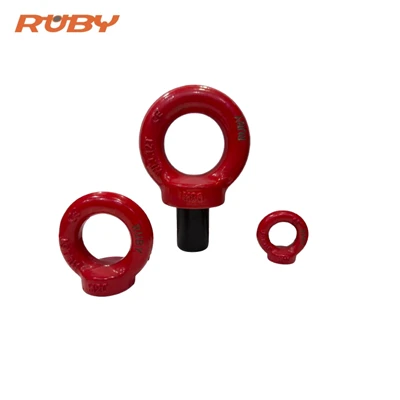
First off, let’s get one thing straight: a lifting point isn’t just a little metal ring or eyebolt you bolt to a beam. It’s engineered to handle a specific load, but that only works if the environment it lives in doesn’t chip away at that design. I’ve had customers bring back eyebolts that snapped mid-lift, and half the time, it’s not the product – it’s where and how they used it. Let’s start with the big one: corrosion. Yeah, I know, corrosion sounds basic, but it’s sneaky. Not all corrosion is the same, either. If you’re lifting stuff around saltwater – like docks, offshore rigs, even warehouses near a coastal road where salt spreads in winter – that’s chloride corrosion. It doesn’t just rust the surface; it eats into the metal’s grain, making it weaker without changing how it looks on the outside. Last year, a construction guy from Miami hit me up because his lifting point failed during a bridge lift. Turns out he’d installed a standard carbon steel eyebolt 6 months prior, and the salt air had corroded the threads so much, the hoist just pulled right through. That’s why we sell galvanized or 316 stainless steel lifting points for coastal jobs – they’re built to fight that chloride stuff.
But corrosion isn’t just salt. If you’re working in a factory with harsh chemicals – like a food processing plant with acidic cleaners, or a metal shop with alkaline coolants – that eats away at metal way faster than regular moisture. I once did a site visit to a brewery where a customer had installed our standard carbon steel eye nuts, and within 3 months, the condensation from the fermenting tanks had mixed with leftover hops and yeast to create a mild acid that pitted the metal. Pitting corrosion is even worse than uniform rust because it creates tiny, hidden weak spots deep in the material. You can’t see it until it’s already a problem. So if you’re in a corrosive environment, don’t grab whatever lifting point is cheap – call us, we’ll hook you up with the right material to match your space.
Next up, temperature extremes. I don’t care if you’re lifting in a snow-covered mine in Minnesota or a steel mill in Texas – heat and cold both mess with metal’s strength, and not in the “cool” way. Let’s start with cold: below -20°F, even steel that’s rated for low temps can get brittle. Think of it like a soda can in the freezer – leave it too long, it snaps instead of bending. I had a customer up in Canada last winter who tried using our standard lifting points to move a load in a cold storage warehouse. The temp was -30°F, and one of the eyebolts shattered when he applied the hoist force. Turned out he didn’t check the temperature rating – our regular points are fine down to -20, but we have heavy-duty low-temperature ones that go lower. And heat? Same deal, just the opposite. If you’re lifting near a foundry furnace or a pipe that’s 500°F+, metal expands, and that expansion changes the stress on the lifting point’s connection. Threads can seize, and the structural integrity of the point drops. We make high-temperature lifting points with alloy steel that can handle up to 1,200°F, but you gotta tell us if you’re working in hot spots before you order. Skipping that step is like wearing flip flops to a ice hockey game – it just doesn’t fit.
Then there’s abrasion and impact. Wait, you’re probably thinking “lifting points don’t get hit, right?” Wrong. If you’re working in a yard with rough loads, like moving scrap metal or construction debris, the lifting point can get banged around before you even hook the hoist. Abrasion is when something rubs against the point – like a chain dragging across an eyebolt, or a load swinging and scraping the side. Over time, that wears down the cross-section of the metal, so it can’t handle the rated load anymore. Impact is even worse: if you drop a load on a lifting point, or it gets hit by a forklift, you get micro-cracks that you can’t see with the naked eye. Those cracks spread, and next time you lift, the point snaps. We’ve got customers who bring in our lifting points for regular inspections, and half the time, the only damage is from a forklift nicking the side – they caught it before it failed. Pro tip: if your lifting point is near high-traffic areas or rough loads, go with a thicker, more durable housing or a swivel lifting point that’s less likely to get banged up.
Oh, and let’s not forget about UV exposure. Wait, UV? On metal? Yeah, I know, you’d think plastic or rubber gets damaged by sun, but metal can too – especially if it’s got any coatings or it’s exposed for months on end outside. If you’re storing lifting points on a job site that’s uncovered for a project, the sun’s rays can break down the protective coatings on steel, making it more prone to corrosion. We actually have a powder-coat option for our lifting points that’s UV-resistant, perfect for jobs that are outside for 6+ months. I had a customer in Arizona last year who stored his lifting points under a tarp that had a hole, and the parts that were exposed to the sun got a weird, brittle surface that ended up cracking mid-lift. Little things like that add up.
Now, a lot of folks ask: “Can I just fix this by inspecting the lifting point regularly?” Sure, inspections help, but if you’re in a harsh environment, you can’t just rely on checking once a month. Corrosion, especially pitting, happens fast. Impact damage can spread without you noticing. That’s why it’s not just about the lifting point itself – it’s matching it to the environment you’re working in. We see so many customers cut corners here, and it’s not worth it. A good lifting point is an investment, not a one-time expense.
Let me throw in a quick story to drive this home. A buddy of mine runs a rigging company out of Houston, and a couple years back, he had to lift a 50-ton piece of equipment from a barge to a pier. He used our regular galvanized lifting points, figured the salt air was mild enough. Halfway through the lift, one of the points corroded so bad, it pulled out of the equipment’s base. Luckily, no one got hurt, but the load swung into a dock and caused $20k in damage. He switched to our 316 stainless steel points after that, and hasn’t had a problem since. That’s the kind of thing that makes us want to do right by our customers – we don’t just sell parts, we help you avoid that mistake.
So, what should you do next? First, figure out exactly what environment your lifting points will be in: is it coastal? High heat? Rough loads? We’re not here to push the most expensive product – we’re here to send you the one that fits your needs. If you’re not sure, just shoot us a message, tell us about your project, and we’ll hook you up with the right specs. Whether you’re a small construction crew or a big industrial facility, we’ve got lifting points that stand up to whatever your job throws at ‘em.
Don’t wait until something goes wrong. Lifting points aren’t the place to cut corners. If you’ve got questions, or you need to order the right ones for your environment, hit us up. We’re here to make sure your lifts are safe, every single time.
Lifting Point References
- Occupational Safety and Health Administration (OSHA). (2022). Lifting Devices and Accessories: General Requirements for Rigging Hardware. U.S. Department of Labor.
- American Society of Mechanical Engineers (ASME). (2021). B30.20 – Below-the-Hook Lifting Devices. ASME International.
- NACE International. (2019). Corrosion Control for Lifting and Rigging Equipment. NACE International.
- Manufacturing Engineer’s Association. (2020). Material Selection for Harsh Environment Lifting Components. MEA Publications.
- International Organization for Standardization (ISO). (2018). ISO 7500-1: Lifting Points for Metal – Requirements and Testing. ISO.
Hangzhou Ruby Imp. & Exp. Co., Ltd.
As one of the most professional lifting point manufacturers and suppliers in China, our products have good reputation in the market. Please feel free to wholesale durable lifting point made in China here from our factory. Also, custom service is available.
Address: Taoyuan Industrial Park, Puyang Town, Xiaoshan, Hangzhou, Zhejiang, China.
E-mail: Sales5@z2lifting.com
WebSite: https://www.ruby-lifting.com/
