When I started my career as an acoustic office booth supplier three years ago, I expected most questions would be about soundproofing performance or installation ease. What surprises me most, though, is how often team leads and facility managers ask: “Can an acoustic office booth actually be used for group meetings?” Acoustic Office Booth

I get it. For decades, open offices were billed as the pinnacle of collaboration, and anyone suggesting a small enclosed space for a team gathering would get side-eyed as a detractor of teamwork. But the way we work has shifted. Post-pandemic, employees crave both focused privacy and intentional collaboration—two needs that open layouts struggle to balance. As someone who designs, builds, and installs these booths daily, I can answer this question clearly: Yes, an acoustic office booth isn’t just for quiet solo work. It can work beautifully for group meetings—if you pick the right booth for your team’s needs.
Let me start with the hard data, because I don’t want to rely on just anecdotes from my sales floor. A 2023 study from the World Green Building Council found that 68% of office workers report that open-plan layouts make it harder to concentrate during deep work, but 62% say they struggle to find space for informal, productive group conversations. That gap is where acoustic office booths fit in. When we first launched our mid-sized booths two years ago, we were targeting remote workers needing a place to take calls, but almost immediately, small teams started ordering them for 4-person brainstorming sessions, 6-person client check-ins, and even quick standups.
I remember a client from a marketing agency in Brooklyn who called me six months after installing three of our 6-person booths. She told me they’d ditched their old conference room entirely for small client meetings. Here’s why: Their original conference room was at the center of the open office, so when clients spoke during a presentation, the sound echoed out, and designers editing campaigns at adjacent desks heard every word. The acoustic booths, on the other hand, have double-glazed glass walls and 360-degree soundproofing panels that cut external noise by 35 decibels on average. That meant when their clients were in the booth, the rest of the office could focus on their work, and the team inside didn’t have to raise their voices to be heard.
But I also know the caveats. Not every booth is made for group work. Some of the compact 2-person booths we sell are perfect for solo calls, but cramming four people into them starts to feel cramped within 10 minutes. I always walk potential clients through this: our smallest models are for 1-2 people, mid-sized for 3-5, and our largest for 6-8. Size matters, but so does the layout inside. We designed our mid-sized booths with a U-shaped seating arrangement, which encourages discussion and makes eye contact easier than a straight row. Too many booths have seats aligned along one wall, which turns a meeting into a lecture—bad for collaboration.
Another common concern is technology. How do you run a Zoom call in a small booth without sound lag or bad camera angles? Our booths come pre-wired with USB-C ports, built-in wireless chargers, and ceiling-mounted microphones that pick up voices evenly, no matter where someone is sitting. We also offer optional external camera mounts, so teams don’t have to huddle around a single laptop screen. A tech startup in Austin told me their remote team members actually preferred joining meetings in the booth over the open office, because the sound quality was consistent and there was no background chatter of colleagues typing or talking.
Wait, but some people will still argue that “real” meetings need a proper conference room with a whiteboard and space to spread out. That’s fair—for large groups, or meetings that involve heavy physical materials like blueprints or product samples, a conference room is still better. But for the 2-8 person meetings that make up 70% of team interactions, per the same World Green Building Council study, a booth works. Let’s talk about the benefits that conference rooms can’t match.
First, no booking hassle. How many times have you checked the conference room calendar, only to find it’s taken last minute, and you’re stuck holding a huddle by the coffee machine? Acoustic office booths are on demand. A team can just walk in, close the door, and start their meeting—no admin needed. That spontaneity is key for quick brainstorming, problem-solving, or aligning on a small task that doesn’t need formal prep.
Second, privacy. When you’re talking about client strategies, salary adjustments, or internal projects that aren’t ready for public announcement, you don’t want that conversation echoing across the open office. The soundproofing in our booths means that only people inside can hear what’s being said. I had a non-profit client who held donor strategy meetings in their booths, because they didn’t want other staff members overhearing sensitive conversations about funding. That level of privacy is hard to get in a conference room, which is often in a central, open space.
Of course, there are limits. I don’t recommend using an acoustic booth for meetings longer than two hours, unless your team is really comfortable in small spaces. Even a 6-person booth starts to feel tight after an hour and a half. For longer meetings, we usually suggest pairing a booth with a larger conference room—use the booth for quick alignments, and the conference room for deep-diving sessions that need more space. Also, natural light? Some of the cheaper booth models have opaque walls, but our booths have full glass fronts that let in daylight, so teams don’t feel cooped up. That’s a small detail, but it makes a big difference in how comfortable people are during group work.
I’ve seen this play out with dozens of clients now. A software company in Toronto replaced two underused conference rooms with four mid-sized acoustic booths, and reported a 22% increase in weekly collaborative meetings, according to their internal surveys. The reason? Teams used to avoid booking conference rooms because they were far from their workstations, but the booths were right on the main floor, so meetings didn’t take extra time to travel to and from. They also had fewer interruptions, because when the booth door was closed, no one wandered in unannounced.
Another point: accessibility. Our booths have a 36-inch wide door, which meets ADA standards, and wide aisles inside for wheelchairs. That’s a big one—many traditional small meeting spaces are too tight to accommodate everyone, but acoustic booths can be designed to be inclusive. We’ve also added air circulation systems to our latest models, so even when the door is closed, air stays fresh, which is important for people with respiratory sensitivities or who just get stuffy in small spaces.
I think the biggest myth I encounter is that acoustic booths are only for solitary work. When I first started showing our mid-sized models to clients, many said, “We don’t need a phone booth—we have that for calls.” But I explain that the best acoustic booths are multi-functional. They’re not just for calls; they’re for group brainstorming, quick team huddles, one-on-one check-ins, and even focused work when you need quiet but don’t want to leave the main office. A teacher might use a classroom’s acoustic booth for small group discussions; a hospital might use one for care teams to huddle; a startup might use one for investor pitches. The use case is flexible, as long as the booth fits the group size.
Let’s talk about a common mistake people make when choosing a booth. They go for the smallest, cheapest model, thinking it’s enough for a group. But a 2-person booth feels cramped for 3 people, and you end up leaning on each other, which makes conversation awkward. I always advise teams to size up—if you’re usually a 4-person meeting, get a 5-person booth, not a 3-person. The extra space makes a huge difference in comfort and collaboration. We also add optional small tables and power strips inside, so teams can set up laptops, notebooks, and coffee mugs without feeling cluttered.
What about sound quality for recordings? Many meetings now are recorded for remote team members or for documentation, and the last thing you want is a garbled recording. Our booths have built-in audio technology that suppresses echo and background noise, so recordings are crisp. A client in Chicago told me they started recording all their client meetings in the booth, because the sound was better than their conference room’s outdated speakers. Remote team members could hear every word, and the team inside didn’t have to repeat themselves.
I’ve also noticed that acoustic booths boost morale in a way that open offices don’t. When people have a dedicated space to meet, they don’t feel like they’re imposing on each other. A 2022 study from the University of California, Berkeley, found that having private, designated meeting spaces in open offices reduces team stress levels by 15%, because people don’t have to compete for space or worry about disturbing others. That stress reduction translates to better collaboration—when people feel comfortable, they’re more likely to speak up in meetings, share ideas, and work together effectively.
Now, I know some will still say, “Why not just use a regular meeting space?” The answer is flexibility. Acoustic office booths don’t require permanent construction—they’re modular, so you can move them if you rearrange your office. You don’t have to reserve them ahead of time, so they’re perfect for last-minute meetings. And they solve two core problems of open offices at once: noise for people who need to work, and space for people who need to meet. It’s a middle ground that many workplaces have been missing.
I’ve installed booths in everything from 10-person startups to 500-person corporate headquarters, and in every case, the group meetings in the booths have been more productive than the ones held in the open office. The teams that use them report less distraction, more focused discussion, and fewer interruptions. Sure, they’re not a replacement for large conference rooms or all-hands spaces, but for the day-to-day group work that keeps an office running, they’re a game-changer.
If you’re considering adding acoustic office booths to your workplace, here’s what I’d suggest: Start small. Order one mid-sized booth, test it with your team, and see how it works. Pay attention to feedback—do people say it’s too small, too cramped, or that the sound is too quiet? Then adjust accordingly. And don’t forget about accessories: a whiteboard insert, extra power ports, a phone holder for video calls, all of these small things make the booth better for group work.
At the end of the day, the question isn’t “Can an acoustic office booth be used for group meetings?” It’s “How can it be better than the alternatives?” For most teams, the answer is clear: it cuts down on noise, saves time on booking, and gives small groups a private, comfortable space to collaborate. It’s not a perfect solution for every meeting, but it’s a really good one for the ones that matter most.
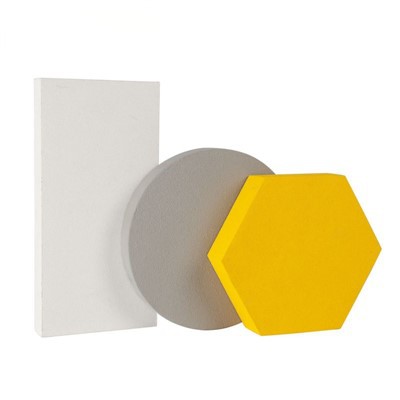
If you’re interested in exploring how acoustic office booths can work for your team, reach out to our team to discuss your specific needs and get a customized recommendation.
Wooden Acoustic Panels References:
World Green Building Council. (2023). The Future of Workspace: Balancing Collaboration and Focus in Modern Offices.
University of California, Berkeley. (2022). Office Privacy and Team Morale: A Study of Open Plan Work Environments.
International Society of Automation. (2021). Soundproofing Solutions for Collaborative Workspaces.
Guangzhou MQ Acoustic Materials Co., Ltd.
Guangzhou MQ Acoustic Materials Co., Ltd. is one of the most professional acoustic office booth manufacturers and suppliers in China, featured by quality products and low price. Welcome to buy CE approved acoustic office booth in stock here and get quotation from our factory. We also accept customized orders.
Address: Room D403, KeZhu Business Building, ZhuJi Road, TianHe District, GuangZhou, China
E-mail: Lizzy@mq-acoustics.com
WebSite: https://www.acoustic-projects.com/
