Hey there, if you’ve ever stood next to a skyscraper going up downtown and wondered how that big flat top crane got there instead of just materializing out of thin air—you’re not alone. As a flat top crane supplier, we get asked this all the time: how do we actually put one of these bad boys together on site? It’s not like slapping together a bookshelf; there’s method to the madness, and skipping a step is basically a ticket to a really, really bad day. Let’s break it down, no jargon overload, just the real deal. Flat Top Crane

First off, before we even touch a single crane part, we’ve got to do our homework. I can’t stress this enough—prep is 90% of the job here. We’re talking site assessment first: what’s the ground like? Soft soil? Rocky? Sloped? We can’t drop a 50-ton crane base on mud and hope it doesn’t sink mid-assembly. That means bringing in a geotech team to test load-bearing capacity, checking for underground utilities (water lines, power cables, fiber optic—we don’t want to dig through those), and scoping out overhead obstacles: power lines, building structures, even tall trees that might be in the lift zone. Oh, and we’ve got to confirm all the permits—local building codes don’t play, and skipping a permit means shut down before you even start. Last thing, we line up the right equipment: a mobile crane strong enough to lift the big parts (we’re talking 100-ton plus here, usually), crew that’s certified—no random guys off the street—so many safety checks here, I could write a whole blog just on pre-assembly prep, but let’s move.
Next step: the foundation. This isn’t just a concrete pad we pour in an hour. Flat top cranes (also called hammerhead cranes, for the old heads) need a solid base to hold them up 200+ feet in the air. For most medium to large cranes, we use a reinforced concrete mat—thick enough to distribute the crane’s weight evenly across the soil, no hot spots that could crack. Sometimes, if the site is extra tricky, we’ll use a steel grillage (a grid of steel beams) on top of driven piles to get extra stability. We set up anchor bolts here too—these are the metal rods that bolt the crane’s lower section (the tower base) straight into the foundation. If those bolts are off by even a quarter inch, the whole thing’s misaligned later, and that’s a nightmare to fix. We double-check every measurement here with a laser level, not just a tape measure—guys, tape measures can be wonky.
Now, the actual assembly starts with the tower sections. Flat top cranes are modular, so the tower is made of these prefabricated steel boxes, usually 20 or 30 feet long. First, we lift the lowest tower section onto the foundation, line up the anchor bolts, tighten them with torque wrenches (specific twist force, no guessing), then add the next section on top. We use temporary ladders and work platforms so the crew can bolt each section together—each connection has to be super tight, no loose bolts. As we stack the tower, we install the climbing frame too—this is the part that lets us make the tower taller once it’s up, without needing to take the whole thing apart. Pro tip here: we don’t stack more than three sections at a time before moving to the next part—mobile crane can only reach so high, and we don’t want to overload the lower sections before they’re anchored.
Once the tower is tall enough (usually 100+ feet, but depends on the job), it’s time for the slewing unit. That’s the big round gearbox at the top of the tower that lets the arm rotate. We lift this unit carefully— it’s heavy, like 15 tons—and lower it onto the very top of the tower. We align the gear teeth perfectly, bolt it down, and then test the rotation right away. We don’t just slap it on and call it a day—we run it slowly, listen for grinding, make sure it swings smoothly without any wobble. If the slewing unit’s off, the crane will shake every time it moves a load, which is dangerous and bad for the parts long-term.
Then the arm—this is the flat top part, right? Wait, no, flat top cranes don’t have the old hammerhead jib with a counterweight on the back—they have a continuous arm, so we lift the main jib first. The jib is split into sections too, so we usually lift each section one by one, attach them to the slewing unit, and bolt them together. We have to make sure the jib is level as we go—use a spirit level up there, no shortcuts. Once the main jib is fully attached, we add the trolley and hoist mechanism—this is the part that moves along the jib and lifts the actual construction materials. That’s another heavy lift, so we have the mobile crane hold it steady while our crew connects all the cables and hydraulic lines. We label every single cable—trust me, mixing up a power cable with a signal cable is a huge mistake.
Now the counter jib (wait, no, flat tops have a counterweight section on the back of the main jib, right? Yeah, even without the hammerhead, they need balance. That’s the heavy block of concrete or steel weights we attach to the opposite end of the main jib. We calculate exactly how much weight we need here—can’t be too light, otherwise the crane will tip forward when lifting a load; too heavy, and it’ll tip backward when the trolley is all the way out. We do this math on site, not just from the factory specs, because every site’s load is different. Then we attach the operator’s cab—this is the small room right below the slewing unit, where the crane operator sits. We run all the control cables from the cab down to the crane’s motors, test every button, every lever, make sure the operator can see the whole work area—blind spots are bad, so we position the cab for maximum visibility.
Wait, hold on, we can’t forget the final checks and testing—this is non-negotiable. After all parts are bolted and connected, we do a load test. We hang a test weight (usually 110% of the crane’s maximum rated load) from the trolley, hold it there for 10 minutes, check for any sway, any movement in the tower, any loose bolts. Then we do a swing test—rotate the full 360 degrees, make sure it’s smooth. We also test all safety features: the overload protection (if you put too much weight, the crane cuts power), the limit switches (so the trolley doesn’t go too far off the jib, the crane doesn’t swing into power lines), the emergency stop button—everyone’s gotta work. And we document all of this, give a copy to the site manager, because if OSHA comes around, they want to see that stuff.
Now, here’s the part most people don’t talk about: the post-assembly prep and safety talks. We do a full walkthrough with the crew before they operate it, point out weak spots, explain the hand signals (no yelling, radio comms are key, but hand signals are a backup). And we stick around for the first few lifts, just to make sure everything’s running right—crane operators are good, but new site, new machine, so we’re there to answer questions, fix any tiny issues before they become big ones.
Wait, what about if the site is tight? Like, urban areas where there’s no room for a big mobile crane to get in? We sometimes use a smaller crane to lift smaller parts, or even assemble the crane in sections that get hoisted by the building’s own construction lifts once the building is a few floors up. But that’s a more specialized case—most of the time, the big mobile crane method works.
As a flat top crane supplier, we don’t just drop off the machine and disappear. We know assembly is half the battle. That’s why we send our own assembly crews—guys who’ve been doing this for years, know every bolt, every torque setting, so you don’t have to worry about some third-party team messing it up.
If you’re a construction manager, a general contractor, or even someone just looking to get a flat top crane on your next project—we’ve got you. We can help with site assessments, foundation design, assembly timelines, and even the post-assembly testing so you’re compliant, safe, and your project doesn’t get delayed because the crane’s not up and running.
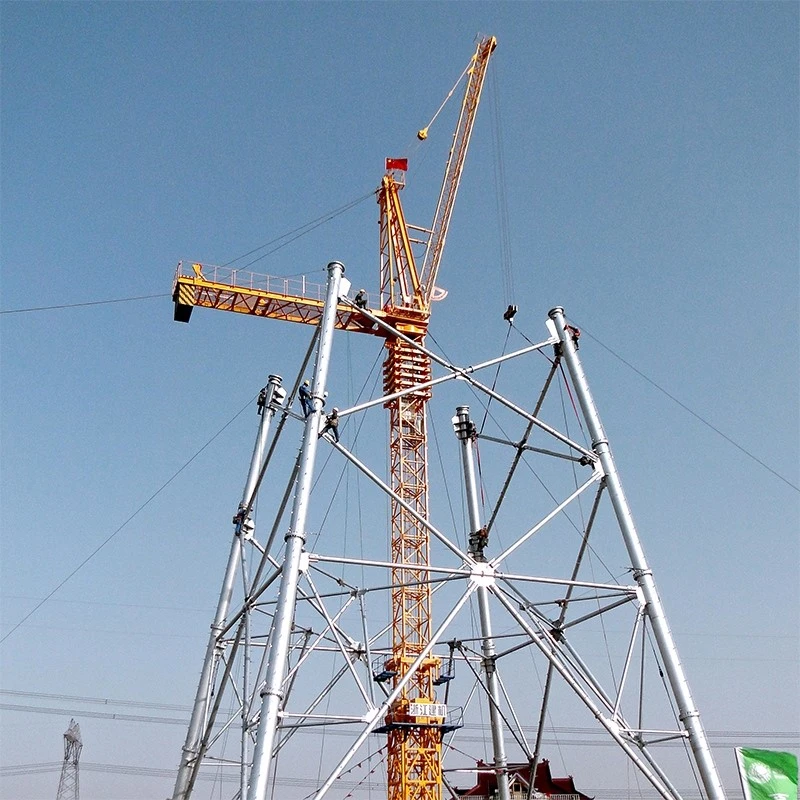
Ready to get a flat top crane on your site, no hassle, no mistakes? Reach out to us directly to talk through your needs. We’ll walk through every step with you, answer all your questions, and make sure your crane is assembled right the first time.
Topkit Tower Crane References:
- Occupational Safety and Health Administration (OSHA). (2022). Crane Assembly, Disassembly, and Erection Safety Standards.
- European Committee for Standardization (CEN). (2019). Safety of Cranes – Flat Top Cranes: Design and Site Assembly Requirements (EN 14439:2019).
- American Society of Civil Engineers (ASCE). (2021). Load and Resistance Factor Design (LRFD) for Crane Foundations.
Zhejiang Construction Engineering Machinery Co., Ltd.
Zhejiang Construction Engineering Machinery Co., Ltd. is well-known as one of the leading flat top crane manufacturers and suppliers in China. If you’re going to buy high quality flat top crane made in China, welcome to get more information from our factory.
Address: A/F, Lianjin Building, 175 Zhaohui Road, Hangzhou, Zhejiang, China
E-mail: zjcmsale2@zjjj.com.cn
WebSite: https://www.zjcmcranes.com/
