As a box-type substation supplier, I’ve spent thousands of hours on service calls and emergency site interventions—enough to know that a sudden substation failure isn’t just a power outage for a factory or a neighborhood. It’s a production line grinding to a halt, a retail store losing refrigerated goods, or a hospital’s backup systems teetering. Over the years, I’ve learned that fast, targeted emergency repairs aren’t just about fixing the problem; they’re about minimizing downtime and getting operations back to normal without risking safety. Below, I’ll break down the structured, field-tested emergency repair protocols we use, tailored specifically for our line of compact, prefabricated box-type substations—since generic advice often misses the unique quirks of these units. Box-type Substation

First, the immediate first step any on-site team must take is lockout/tagout (LOTO), and I can’t emphasize this enough. I’ve seen vendors skip this step “just to check a wire” and end up with severe arc flash injuries that could have been avoided. For box-type substations, which house high-voltage busbars, transformers, and low-voltage distribution panels all in a compact enclosure, LOTO isn’t just a formality: the main disconnect switch gets locked in the “off” position with a unique tag bearing our substation’s serial number, and every team member has their own personal lock. We also use a second, redundant lock on the enclosure’s access door to keep unauthorized personnel out while work is underway. The key here is that this step takes 5 minutes, and rushing it leads to delays that cost hours (or worse, lives).
Next, rapid diagnostic triage—this is where our years of substation engineering experience pays off, because box-type units have a small set of common failure points, and we train our repair technicians to narrow down issues in 10 minutes or less. The most frequent emergencies we respond to fall into four categories: low-voltage feeder faults, transformer overheating, busbar arcing, and control circuit failure. Let’s break each down with specific, actionable repairs:
-
Low-Voltage Feeder Faults. A common emergency is a tripped circuit breaker on the low-voltage side, often caused by a short circuit from a damaged cable or an overloaded branch line. First, we don’t just reset the breaker—we isolate the fault. For box-type substations, this means opening the feeder disconnect switch (labeled clearly on the interior panel, which we standardize for all our units) and testing the feeder with a continuity tester. If there’s continuity, the fault is upstream in the substation’s busbar; if there’s no continuity, the fault is in the external cable, which we can splice on-site with a heat-shrink kit (we keep these in every emergency service van). If the breaker won’t reset even after isolating the feeder, the fault is internal—we then check for blown fuses, which are standardized across all our box-type units, so a replacement takes 2 minutes. I still remember a call last year to a food processing plant that lost power to their cold storage; we isolated a faulty feeder, replaced a blown Class K fuse from our on-site stock, and had them back up in 12 minutes—critical because $10,000 worth of inventory was on the line.
-
Transformer Overheating. Transformer failures are more serious, but in box-type units, they’re usually triggered by overloading or a cooling fan malfunction. First, we shut off the high-voltage input to the transformer, then use our thermal imaging camera (a tool we supply to our service teams) to spot hotspots. If the cooling fan (mounted on the transformer’s exterior, a design feature we use for easy access) has seized, we can swap it in 15 minutes—we stock universal fan assemblies for all our 50kVA to 250kVA units, which cover 90% of the box-type substations we deploy. If the overheating is due to an internal winding fault, we have a standardized temporary repair: we isolate the faulty transformer, switch to a spare distribution panel (pre-wired for quick connection in our box-type units) to reroute power, while the full transformer replacement is scheduled for the next business day. This prevents extended outages for small businesses that can’t afford 24 hours of downtime.
-
Busbar Arcing. Arcing in the busbar compartment is rare but dangerous, usually caused by loose connections or moisture buildup in the enclosure (since box-type units are often installed outdoors). Our first step here is to use a high-voltage detector (non-contact, to avoid direct exposure) to confirm the arc is extinguished, then vent the enclosure for 5 minutes to disperse any residual gas. We then tighten all busbar connections with a torque wrench calibrated to our substation’s specifications—no guesswork here; every connection has a labeled torque value to prevent over-tightening (which damages copper) or under-tightening (which causes arcing). If moisture is the root cause, we install a desiccant breather (another stock item) in the busbar compartment and add a small, low-heat fan to prevent future moisture buildup—something we’ve incorporated into our emergency kits after seeing three similar failures in 2022.
-
Control Circuit Failure. Control circuits (which manage breakers, meters, and remote monitoring) often fail due to a blown control fuse or a loose terminal. This is the easiest emergency to fix, but it’s also the one where untrained teams make mistakes. For our box-type substations, we color-code control circuits (red for 120V, blue for 24V) to avoid mixing up voltage levels, and every control fuse is a miniature cartridge that takes 30 seconds to replace. Last month, a small office park had their substation’s control panel go dark, so we checked the fuse, replaced it, and had their remote monitoring and breaker controls back online in 2 minutes. The key here is that we pre-label all control components during manufacturing, so even a new technician can troubleshoot without confusion—something that sets our units apart from generic box-type models.
Once the immediate emergency is resolved, we have a mandatory step: post-repair verification and documentation. For our service teams, this means testing each feeder for voltage and continuity, verifying the transformer’s load is within safe limits, and checking that all interlocks (like the door interlock that shuts off power when the door is open) are functional. We also provide the customer with a digital report outlining what failed, the repair performed, and a 30-day maintenance reminder specific to their box-type substation. This isn’t just customer service—it’s a way to prevent repeat failures, because many emergency issues stem from skipped maintenance.
Now, let’s talk about what we don’t do. We never attempt major repairs (like transformer winding replacements or busbar re-busing) on-site during emergencies. Box-type substations are modular, so we carry a pre-wired spare low-voltage panel or a compact transformer in our service vans for quick swaps, but for internal high-voltage repairs, we pull the failed component back to our workshop for precision work. Rushing these repairs leads to safety hazards and longer downtime, which is why our protocol prioritizes temporary, safe fixes to get power back while scheduling permanent repairs that don’t risk further damage.
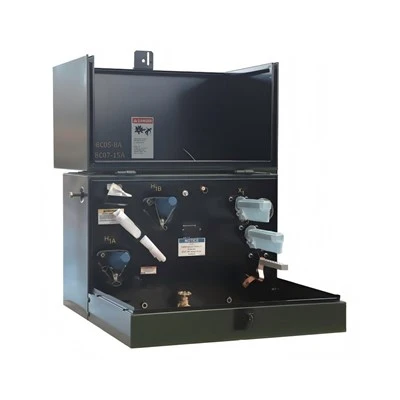
As a box-type substation supplier, our goal isn’t just to sell equipment—it’s to be a partner when things go wrong. That’s why we maintain a 24/7 emergency response team, with service vans stocked with parts for every model we manufacture, and technicians trained exclusively on our box-type units. If you’re dealing with an unexpected substation failure, or you’re preparing for emergency protocols for your facility, our team is here to walk you through on-site assessments, provide immediate repair guidance, and work with your team to minimize downtime. Don’t wait for an emergency to plan—reach out to us to discuss your substation needs, from 24/7 emergency repair support to proactive maintenance plans tailored to your operations.
Intergrated Energy Storage System References
- International Electrotechnical Commission (IEC). IEC 62271-202: High-voltage switchgear and controlgear – Part 202: Alternating current metal-enclosed switchgear and controlgear for rated voltages above 1 kV and up to and including 52 kV, 2020.
- Institute of Electrical and Electronics Engineers (IEEE). IEEE Std 141-2013: Recommended Practice for Electric Power Distribution for Industrial Plants, 2013.
- National Electrical Manufacturers Association (NEMA). NEMA SG6: Guide for the Application, Installation, and Maintenance of Padmounted and Box-Type Substations, 2019.
- Occupational Safety and Health Administration (OSHA). 29 CFR 1910.331-1910.335: Electrical Safety-Related Work Practices, 2022.
- Box-Type Substation Manufacturers Association (BTSMA). Emergency Response Guidelines for Compact Prefabricated Substations, 2021.
Ruibian (Jiangsu) Electric Power Co., Ltd.
Ruibian (Jiangsu) Electric Power Co., Ltd. is one of the most professional box-type substation manufacturers and suppliers in China, featured by quality products and good price. Please rest assured to buy durable box-type substation in stock here from our factory. Contact us for pricelist.
Address: No.89 Changjiang West Road, Haian City, Jiangsu Province, China
E-mail: business@ruibianjiangsu.cn
WebSite: https://www.ruibianpower.com/
