If you’ve ever stood in front of an equipment cabinet, wiring closet, or workshop workbench staring at two spools of wire—one labeled “power cable” and the other “control circuit wire”—you’ve probably wondered the same thing: Can I just use an electric wire I already have on hand for a control circuit? As an electric wire supplier who’s been answering this exact question for 12 years, I hear this more often than you’d think. It usually comes from a small business owner who’s grabbing scraps to wrap up a new machine control panel, a maintenance tech who’s pulling leftover wire to fix a sensor line, or a hobbyist building a custom automation rig. And while the answer isn’t a flat “yes” or “no,” it’s way more nuanced than just grabbing whatever’s easiest to reach. Electric Wire
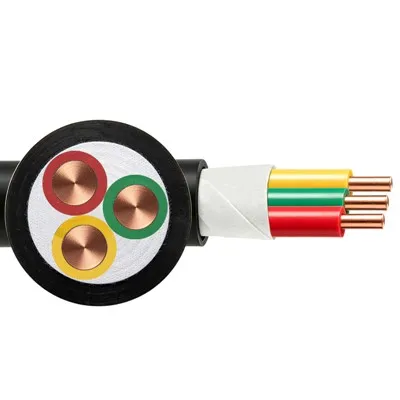
First, let’s break down what separates a standard electric wire (that’s usually meant for power distribution) from wire designed specifically for control circuits. Most “electric wire” sold in hardware stores or even bulk for general use is built to carry large amounts of current to run motors, heaters, or lighting. For example, a 14-gauge copper THHN wire is rated for up to 15 amps at 600V, enough to power a 1,500W space heater or a 1HP small motor. Control circuits, on the other hand, are the nervous system of a machine, not the muscles. They carry low current—usually 5 amps or less, often 1 amp or even tiny milliamp signals for sensors, PLC inputs, or safety devices like limit switches. Their job is to send a signal, not power a load. That’s the first big difference: voltage and current rating.
But wait—does that mean a power wire can work for a low-current control circuit sometimes? Sure, in a pinch, maybe. If you’re a hobbyist putting together a one-off prototype in your garage, and you’re only running a 24V limit switch signal across 10 feet, a spare piece of 18-gauge Romex might technically work. But here’s the catch: that’s not what the wire was made for, and cutting corners here can lead to issues down the line. Let’s get into the real-world risks, because that’s where most people slip up.
First is insulation. Power wires like THHN or Romex have insulation rated for tough, high-heat environments, but that insulation is often thicker than needed for control circuits. Wait, thicker insulation might sound like a good thing, right? Not always. Control circuits need small, flexible wire to fit into tight spaces in control panels, between sensors mounted on moving machine parts, or in conduit runs that have lots of bends. Thick, rigid power wire is hard to bend, which means you’ll be forcing it through corners, straining the conductor, and risking insulation damage over time. Plus, standard power wire insulation is often made for a specific temperature range—if you’re running a control circuit near a high-heat motor or in a cabinet where temperatures climb above 140°F, cheap power wire insulation might crack or degrade, exposing live conductors and creating a shock hazard.
Then there’s conductor material and construction. Most electric power wires use solid copper conductors for permanent runs, because solid copper is cheap and efficient for steady, high-current loads. But control circuits, especially those running to moving parts or through frequent bends, need stranded copper wire. Stranded conductors are made of dozens of tiny copper strands twisted together, so they’re flexible and can handle repeated movement without breaking. If you use solid power wire for a control line to a robotic arm or a door on a conveyor, every time that arm moves, the solid copper will flex at the bend point until it snaps. I’ve had a customer come to me two years ago complaining that their packaging machine’s sensor kept cutting out every time the conveyor started—turns out they’d used 16-gauge solid power wire for the sensor line, and the constant bending had broken the conductor inside, even though the insulation looked fine.
Another big factor is voltage drop. Even if your control circuit carries low current, if you run a wire that’s too small (or the wrong type of power wire) over a long distance, voltage drop can mess up your signals. Let’s say you have a PLC input module that needs 24V to trigger, and it’s 100 feet away from the sensor. Standard 16-gauge power wire has a resistance of about 4 ohms per 1,000 feet. So over 100 feet, that’s 0.4 ohms. If the circuit draws 0.1 amp, that’s a 0.04V drop—hardly noticeable. But if you use a thinner power wire, say 20-gauge, that’s 16 ohms per 1,000 feet, 1.6 ohms over 100 feet, and a 0.16V drop. Still small, but here’s the thing: many modern sensors, like optical or proximity sensors, have a narrow tolerance for voltage. If your power wire isn’t rated for control circuit signal integrity, that voltage drop might be enough to make the sensor fail to trigger, leading to machine downtime, scrap parts, or even safety hazards.
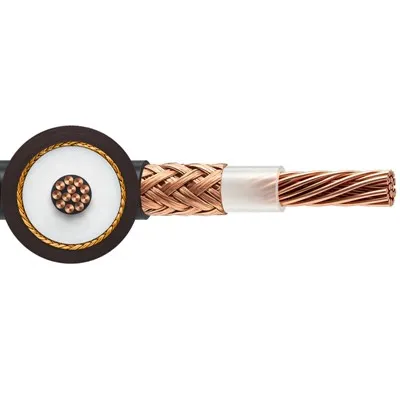
Wait, what about low-voltage power wire, like the kind used for doorbells or landscape lighting? That’s 12V or 24V, similar to common control voltages. Can you use that? Again, maybe for a very simple, short-run control circuit—but again, it’s not designed for control’s requirements. Doorbell wire is usually unshielded, for one. A lot of control circuits run near power lines or variable frequency drives (VFDs) that create electromagnetic interference (EMI). That EMI can interfere with low-voltage control signals, causing misreads or false triggers. Control circuit wire often has a shield (either a braided copper shield or foil) to block that interference. Doorbell wire doesn’t have that—so if you run it alongside a 480V power line, your sensor signals might get garbled, leading to costly mistakes.
And let’s not forget code compliance. If you’re running wire in a commercial or industrial setting, the National Electrical Code (NEC) has specific rules for control circuits. NEC Article 725 covers Class 1, Class 2, and Class 3 circuits, which include most control circuits. Class 2 circuits, for example, are low-voltage, low-power circuits like control signals, and require wire that’s listed for Class 2 use. Using a standard power wire in a Class 2 circuit can violate code, which means your equipment might not pass inspection, or you could be liable if there’s a fire or shock hazard. I’ve had a small manufacturing customer get dinged $5,000 in fines last year because their inspector found they’d used power wire for their control circuits instead of the listed control wire required by code. That’s a way bigger cost than just buying the right wire upfront.
Now, I know some of you are thinking, “But I’ve done it before, and it worked.” That’s true—you can get away with it for a while, especially in small, low-stakes applications. But that’s the risk: it might work for a day, a month, or even a year, but when it fails, it’s usually at the worst possible time. Maybe it’s a middle-of-the-night production run, ruining a batch of product. Maybe it’s a safety interlock on a machine, leading to a near-miss or injury. I remember a customer who called me in a panic at 2 a.m. a few years back—their bottling line had shut down, and they traced it to a broken power wire used for the conveyor’s control sensor. They’d spent 10 hours troubleshooting, missed a delivery window, and had to pay extra for emergency wire. All because they’d tried to save a few bucks by grabbing scrap power wire instead of using control wire.
So when can you use an electric wire for a control circuit? Let’s set the very narrow exceptions:
- It’s a temporary, non-critical, short-run application (less than 10 feet, no moving parts, no proximity to high-power EMI sources).
- The wire is stranded (not solid), appropriately sized for the control current, has insulation rated for the temperature of your environment, and is not running alongside power lines.
But even in those cases, it’s still a temporary fix, not a long-term solution. For anything critical—moving parts, sensors, safety circuits, commercial or industrial installations—the right choice is to use wire specifically designed for control circuits.
At our wire business, we stock a full range of control circuit wire: stranded copper, flexible for tight spaces and movement, insulation rated for 90°C or higher for high-heat cabinets, shielded options for EMI-heavy environments, and all listed to meet NEC Class 2 and other relevant codes. We work with small shops, industrial manufacturers, automation integrators, and even hobbyists—we don’t just sell wire, we help people pick the right one for their job.
If you’re not sure what wire you need, or you’ve got a project where you’re thinking of using a spare electric wire for a control circuit, reach out to our team to discuss your specific needs. We can help you avoid the hassle and cost of future failures, and make sure your control circuits work reliably. Whether you’re building a new control panel, repairing a sensor line, or outfitting an entire factory, we’ve got the wire to fit your requirements.
References
Cable Assemblies & Accessories National Electrical Code (NEC) Article 725: Class 2, Class 3, and Remote Control, Signaling, and Power-Limited Circuits.
Underwriters Laboratories (UL) Standard 758: Appliance Wiring Material.
International Electrotechnical Commission (IEC) Standard 60227: Insulated Cables for Rated Voltages Up to and Including 450/750 V.
NFPA 70E: Standard for Electrical Safety in the Workplace.
Yangzhou Huayu Cable Co., Ltd.
Yangzhou Huayu Cable Co., Ltd. is one of the most professional electric wire manufacturers and suppliers in China, also supports customized service with low price. Please feel free to wholesale advanced electric wire made in China here from our factory. Contact us for pricelist.
Address: No. 9 Jingang Road, Yangzhou City, Jiangsu Province, China
E-mail: huayucableco@126.com
WebSite: https://www.huayucabletech.com/
