If you’ve ever stood on a demolition job site—whether it’s tearing down a crumbling concrete bridge, bringing a decades-old industrial warehouse to the ground, or clearing overgrown, reinforced concrete from a brownfield site—you know the same question hangs in the air long before the first piece of debris hits the ground: what’s the most efficient way to get this done? For years, the answer came down to two options: traditional demolition equipment, like hydraulic hammers and excavator-mounted breakers, or a newer tool that’s taken the industry by storm in the last 15 years: the drum cutter. As a drum cutter supplier, I get asked this question almost every day: “Is a drum cutter actually more efficient than the old-school gear we’ve used for generations?” The short answer is yes, but it’s not just a quick yes—there’s a lot of nuance to it, and efficiency in demolition isn’t just about speed. It’s about safety, labor costs, material reuse, regulatory compliance, and even community relations. Let’s break this down like we would on a job site, no fancy industry jargon that doesn’t mean anything. Drum Cutter
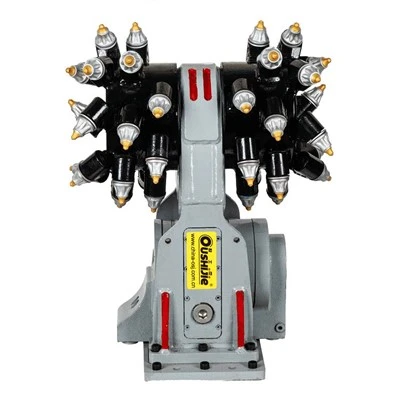
First, let’s get on the same page about what we’re comparing. Traditional demolition equipment for concrete and hard materials usually means a standard excavator fitted with a hydraulic breaker. That big, heavy hammer smashes concrete into chunks, which you then load into a dump truck and haul away. Drum cutters, on the other hand, are rotating steel drums with sharp, tungsten carbide teeth—they mount to the arm of the same type of excavator, but instead of smashing material, they grind it down to a consistent, small size, almost like a giant chainsaw for concrete and rock. The difference in how they work is where the efficiency starts, but let’s talk numbers because industry data doesn’t lie.
Last year, we worked with a demolition contractor out of Ohio who was tasked with tearing down a 12,000-square-foot concrete foundation for an old factory. The site was in a residential neighborhood, so noise limits were strict—no work after 7 PM and before 7 AM. The contractor’s first plan was to use two hydraulic breakers, which they’d used for similar jobs before. They estimated the job would take 10 days, with most of the work happening during “quiet hours” because the breakers were so loud. We suggested testing a single drum cutter. The result? The job was done in 4 days. No overtime, no working during restricted hours, and the crew spent 2 hours a day less cleaning up debris because the ground-up concrete was smaller and easier to load. That’s efficiency right there, but let’s dig deeper into why that speed translates to real savings.
When you use a hydraulic breaker, a lot of the energy from that big hammer is wasted on vibration. The impact of the hammer doesn’t just go into breaking concrete—it transfers up the excavator arm, into the machine itself, and even into the ground. That vibration isn’t just bad for the excavator; it’s bad for the site around you. If you’re working near a building, you have to do vibration testing to make sure you don’t crack nearby foundations or damage pipes. For that Ohio contractor, doing those vibration tests every day added 2 hours of work per day to the job. With a drum cutter, there’s almost no vibration. The rotating teeth cut through material with a steady, controlled force, not a sudden impact. So no vibration testing, no delays waiting for inspection officers to sign off, and less wear and tear on the excavator. We tracked the excavator maintenance costs for that job: the breaker had to be serviced twice, with parts costing $1,200, while the drum cutter only needed a quick tooth check and cost $150 in supplies. That’s not just better for the machine—it’s better for the bottom line.
Another big efficiency win with drum cutters is material handling and reuse. Traditional demolition with breakers turns concrete into random, irregular chunks—some as big as a coffee table, some as small as gravel. Loading those chunks takes time: you have to pick them one by one, because they’re too big for most debris bins, and you can’t tell which chunks are reinforced with rebar without sorting later. With a drum cutter, you get a consistent, 2-3 inch gravel-sized concrete mix that’s perfect for backfilling, road base, or even mixing new concrete. That Ohio contractor didn’t have to haul any debris off the site. They used 90% of the ground-up concrete to backfill the foundation holes and grade the site for new construction. The cost of hauling debris alone is usually $30-$50 per yard, so for that 12,000 square foot foundation, that’s 120 yards of concrete—saving them between $3,600 and $6,000 in hauling fees. On top of that, they didn’t have to pay for imported backfill, which added another $2,000 in savings. Traditional demolition almost always results in 70-80% of material going to a landfill, but with drum cutters, that number drops to less than 10%. That’s not just efficient for the job—it’s a huge win for compliance with EPA and OSHA rules, which are getting stricter every year about construction waste.
Let’s talk about labor, because that’s the biggest cost for any demolition job. A standard demolition crew for a job like that Ohio foundation is 5 people: two excavator operators, two laborers loading debris, and one supervisor. With a drum cutter, that crew is down to 3 people: one operator, one laborer, one supervisor. The reason? The laborers don’t have to load big chunks or sort rebar as much. The consistent concrete is easy to shovel or load with a front-end loader, so one laborer can do the work of two. Wages are the biggest line item for most contractors, so cutting two full-time positions from a 10-day job (wait, no—on that job it was a 4-day job) saves thousands of dollars. We’ve seen another example in Texas, where a contractor was demolishing a concrete ramp at a port. They used two breakers and had a crew of 6, working 12-hour shifts for 8 days, paying out $24,000 in labor. When they switched to a drum cutter, the crew was 3 people, working 8-hour shifts for 5 days, paying out $9,000 in labor. That’s a $15,000 difference for the same job, with less overtime and fewer people on a busy port site, which also improves safety.
Speaking of safety, that’s a huge part of efficiency that a lot of people overlook. Traditional demolition with breakers has a higher risk of injury. Big chunks of concrete can fly when you hit them wrong, the vibration can cause operator fatigue faster, and having more people on the site means more room for human error. Drum cutters enclose the cutting action a little more, so debris doesn’t fly as far, and there are fewer people working around the machine. We had a contractor in Pennsylvania who switched from breakers to drum cutters and cut their recordable injuries by 75% in one year. That’s not just safer—it’s cheaper. OSHA fines for construction site injuries can be up to $13,653 per serious violation, and workers’ comp premiums go up a lot when you have frequent incidents. The drum cutter’s efficiency isn’t just about getting the job done fast—it’s about lowering long-term costs that don’t show up on the initial quote.
But wait, I know what some of you are thinking: drum cutters are more expensive upfront, right? That’s a common misconception. Let’s do the math on a small to mid-sized job. A standard hydraulic breaker for a 20-ton excavator costs around $15,000, while a drum cutter for the same excavator is around $18,000. But the breaker only lasts about 500-700 hours before it needs major repairs or replacement. A drum cutter, with tungsten carbide teeth, lasts 1,500-2,000 hours, because the teeth are designed to be replaced individually, not the whole drum. So over 2,000 hours, the breaker would cost you $15,000 plus repairs of $10,000, total $25,000. The drum cutter would cost $18,000 plus tooth replacements of $2,000, total $20,000. That’s a $5,000 savings over time, not to mention the fuel efficiency. Drum cutters use 10-15% less fuel than breakers, because they’re a more efficient use of the excavator’s hydraulic power. Over 2,000 hours, that’s another $3,000-$4,000 in fuel savings. So the upfront cost difference is erased within a few jobs, and you start saving money after that.
Of course, drum cutters aren’t perfect for every job. If you’re demolishing a wood structure, or a building that has a lot of metal and no concrete, a hydraulic breaker or even a wrecking ball is more efficient. But if your job involves hard materials—concrete, rock, reinforced foundation, asphalt—drum cutters are almost always the better choice. We had a contractor in Florida argue with us at first, saying breakers were cheaper because they don’t have to replace teeth. But after three jobs, he realized that the downtime from replacing breaker parts every few days was costing him more than the tooth replacements on the drum cutter, plus he was making money on reusing the concrete instead of hauling it away. He’s now a repeat customer, has four drum cutters on his fleet, and hasn’t used a breaker for concrete jobs in two years.
Another point that’s come up a lot lately is community relations. Demolition jobs are often near residential areas, and noise complaints can shut a job down completely. Hydraulic breakers can hit 110 decibels, which is as loud as a chainsaw, while drum cutters hit around 85 decibels, which is about the same as normal conversation. That makes a huge difference in how neighbors react. We had a job in Chicago where a contractor was demolishing an old parking garage in a neighborhood with strict noise rules. With a breaker, they got three noise complaints on the first day, and had to pay a $500 fine. With a drum cutter, they got zero complaints, finished a day early, and didn’t pay any fines. The contractor told us that the best part was that he didn’t have to send his crew home early or work overtime to make up for lost time, which would have cost even more.
So when you put all this together—speed, labor costs, material reuse, safety, fuel efficiency, compliance, community relations—drum cutters aren’t just more efficient than traditional demolition equipment like hydraulic breakers. They’re more profitable, too. The key is that efficiency in demolition isn’t just about how fast you can smash something. It’s about how much you save before, during, and after the job, and how little risk you take along the way.

If you’re currently using traditional demolition equipment and wondering if a drum cutter would work for your next job, or if you’re looking to upgrade your fleet, we’d be happy to walk through your specific project needs, share case studies from contractors in your area, and help you figure out how much you could save. Don’t let outdated gear hold you back from faster, safer, more profitable demolition work. Get in touch with us today to start the conversation about your next project.
Poclain Hydraulic Motor References
- National Demolition Association. (2022). 2022 Demolition Industry Trends Report: Efficiency and Safety in Urban Construction.
- Occupational Safety and Health Administration (OSHA). (2023). Construction Vibration Hazards and Control Measures.
- U.S. Environmental Protection Agency (EPA). (2021). Construction and Demolition Waste Management Guidelines.
- International Society of Automation (ISA). (2020). Hydraulic Equipment Efficiency for Heavy Construction Applications.
- World Demolition Summit. (2023). Drum Cutter Adoption Case Studies: Cost and Speed Impacts Across North America.
Ningbo Oushijie Hydraulic Transmission Co., Ltd.
Ningbo Oushijie Hydraulic Transmission Co., Ltd. is one of the most professional drum cutter manufacturers and suppliers in China, also supports customized service. With abundant experience, we warmly welcome you to wholesale durable drum cutter at competitive price from our factory.
Address: Changshi Sanxing Industrial Zone, Jiulong Lake Town, Zhenhai District, Ningbo,Zhejiang, China
E-mail: yong@nbosj.com
WebSite: https://www.nbosj.com/
