As a shuttle table HF welding machine supplier, I’ve spent thousands of hours walking operators, production managers, and maintenance teams through our machines, answering questions that range from “Will this fit my 12-foot vinyl banner line?” to “How much control do I actually need to avoid scrapping expensive materials?” The truth is, shuttle table HF welding isn’t a one-size-fits-all process—especially when your work runs the gamut from inflatable boat seams to PVC rainwear, tarps to medical pouches. The control system isn’t just a panel of buttons; it’s the brain that decides seam consistency, material safety, operator ease, and how much downtime you’ll face when a job goes sideways. Over 15 years in this business, I’ve seen far too many shops overpay for a control system they’ll never use, or underinvest and waste hundreds of pounds of material on botched welds. Today, I’m breaking down every control system we offer for our shuttle table HF machines, tailored to different production needs, so you can make a call that works for your shop. Shuttle Table HF Welding Machine
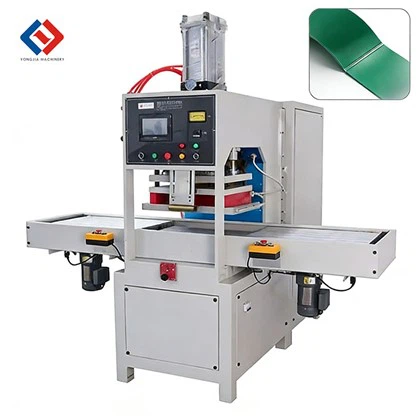
Let’s start with the basics, because there’s no way to talk about control systems without grounding it in what shuttle table HF welding actually does. A shuttle table machine uses a two-sided moving (shuttling) table that loads material on one side, welds it on the other, so you don’t have to stop production to reload—critical for high-volume shops. The HF (high frequency) energy melts thermoplastic materials (PVC, PU, TPU, vinyl, even thin polyethylene) under pressure, creating a molecular bond stronger than the material itself, when set right. The control system regulates that energy, along with table movement, pressure, and cooling. Get it wrong, and you’ve got a seam that pops under tension, a burned hole in a $500 inflatable, or a machine that locks up mid-job. That’s why picking the right control system isn’t just a tech decision—it’s a bottom-line decision.
Our entry-level control system is the Analog Relay Control. I know what you’re thinking: “Analog? That sounds old.” Wait, don’t write it off yet. For small shops, startups, or shops that run mostly the same simple jobs—like welding PVC tarps, basic banner hem seams, or standard inflatable valve covers—this is a perfect fit. It’s simple, intuitive, no fancy computer or touchscreen. Operators set knobs for HF power level, weld time, cool time, and pressure. That’s it. No complicated programming, no software updates, nothing. You just turn the knob to match your material (thinner vinyl needs less power, thicker tarp needs more) and go. I installed our first Analog Relay Control machine for a small awning shop in Ohio back in 2009, and they still run it daily. They’ve had a few wiring fixes over the years, but they’ve never spent hours troubleshooting a software glitch. The downside? It’s less precise. If you’re welding 0.5mm TPU medical pouches, a 2% difference in power can burn through the material. For that, analog might not cut it. But if you’re doing bulk, high-volume, relatively simple jobs, this is a no-fuss, low-cost option that gets the job done. We recommend it for shops that run less than 500 unique jobs a month, and don’t specialize in precision work.
Next up, the Mid-Range Touchscreen PLC Control System. This is our most popular option right now—most of our mid-sized production shops go with this, and for good reason. It’s a step up from analog, but not overcomplicated. The touchscreen gives you a clear interface where you can save job presets for every material and seam type. So if you have a job for 10oz vinyl banners, a preset that has 80% power, 2.5 second weld time, 1.5 second cool time is just a tap away, no more guessing with knobs. No more wasting 10 feet of material testing settings every time you switch jobs. The PLC (programmable logic controller) also lets you control the shuttle table’s movement precisely—you can set exact shuttle positions, so the loading and welding sides line up perfectly every time. That’s a big deal for consistent seam alignment, especially for jobs like inflatable boats where misalignment means a weak seam. What I like most about this system is the balance: it has enough features to make production easier, but it’s not so complex that you need a computer science degree to run it. We include on-site training for every shop that buys this, and most operators are comfortable with it within a few hours. It also has basic safety features—like an emergency stop that locks the HF energy immediately if triggered, and a door interlock that shuts the machine off if someone opens the work area mid-cycle. The only caveat for this system: if you need to track production data, like how many seams you’ve welded in an hour, or adjust power dynamically for variable material thickness, you’ll need to step up. For most shops, though, this is the sweet spot.
Now, for the precision-focused shops—our Digital HF Energy Control System. This is our top-tier control, designed for jobs where even a tiny mistake costs big money. Think medical device manufacturers welding TPU wound dressings, inflatable boat makers needing airtight, leak-proof seams, or custom footwear brands welding PU shoe uppers. This system doesn’t just set a static power level—it monitors the actual RF (radio frequency, which is what HF uses) energy output in real time, 100 times per second. If the material’s thickness varies a little (say, a spot that’s 0.01mm thinner than the rest), it automatically adjusts the power to compensate, so you don’t get a weak seam or a burn. That kind of precision is game-changing for industries where compliance is key—like medical, where weld consistency has to meet FDA standards. This system also stores hundreds of job presets, can integrate with your production management software (so you can send job specs straight from your office to the machine, no operator typing required), and tracks detailed data: total number of welds, power used per job, error logs if something goes wrong. I had a client last year who switched from a mid-range PLC to this system because they were scrapping 15% of their inflatable kayak seams due to power inconsistencies. After switching, that scrap rate dropped to less than 1%. The only thing to note here is the cost—this system is a premium investment. It’s not for a shop that does one-off banner jobs. But if you’re bidding on high-margin, precision contracts where quality is non-negotiable, it pays for itself in material savings alone.
Wait, I should also mention a specialized control system we offer for shops that run a mix of small, intricate parts and large, heavy materials. It’s the Hybrid Shuttle Table Control System. This one combines analog power regulation for large, thick materials (like 20oz vinyl tarps or heavy-duty bulk bags) with the touchscreen presets and shuttle precision of our PLC system for small, detailed parts. So if your shop does both: say, welding 4-foot vinyl banners for events and small TPU sensor covers for industrial equipment, this system handles both without needing to switch out parts or reconfigure settings constantly. I see a lot of custom fabrication shops fall into this category—they don’t just do one type of job, so a one-size-fits-all control system doesn’t work for them. The hybrid system eliminates that hassle, letting them switch between jobs in 30 seconds instead of 10 minutes. That’s a huge productivity gain when you’re juggling multiple orders a day.
Now, let’s talk about what matters most when choosing any of these control systems, beyond the specs. No control system works if you don’t maintain it, and no system is good if your operator doesn’t know how to use it. That’s why we don’t just sell you the machine and walk away—we tailor the training to the control system you pick. If you go with analog, our training is focused on quick setup, troubleshooting common issues like knob calibration. If you go with the digital precision system, our training includes how to pull error logs, adjust power compensation settings, and ensure compliance with industry standards. We also offer ongoing support—our team is on call 12 hours a day, 6 days a week, to walk you through any control issue, whether it’s a shuttle misalignment mid-job or a glitch in a preset.
I get it, looking at control systems for a new machine can feel overwhelming. There’s always that voice in your head: “Did I pick the right one? Will I regret this in six months?” I’ve been in this long enough to know that the best call is to match your control system to your current needs, not the ones you think you might have in five years. If you’re a shop just starting out, doing bulk tarps, analog is fine. If you’re expanding into precision inflatables, step up to the PLC or digital system. And if you’re juggling multiple job types, the hybrid is worth the extra cost.
At the end of the day, a shuttle table HF welding machine’s control system is the backbone of your production. It’s what turns raw material into finished, weldable parts, what keeps your material waste low, and what keeps your operators safe. Over the years, I’ve helped hundreds of shops pick the right one, and not a single one has regretted choosing a system that fit their workflow, instead of picking the most expensive option on the shelf.
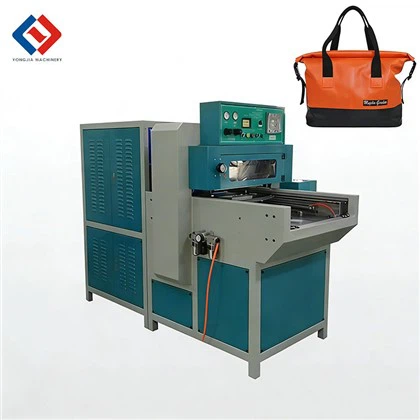
If you’re ready to talk through which control system makes sense for your shop—whether you’re a small awning business, a mid-sized inflatable manufacturer, or a large medical device producer—we’re here to help. We can walk you through the specs, share case studies from shops like yours, and answer every question you have, no sales pressure. Just reach out to connect for a no-obligation consultation, and let’s find the solution that works for you.
Shuttle Table HF Welding Machine References
- HF Welding Technology: Principles and Applications, Industrial Press, 2018
- Control Systems for Industrial Welding Machinery, Journal of Manufacturing Processes, Vol. 47, 2020
- Safety Standards for High Frequency Welding Equipment, OSHA Technical Manual, 2021
- Shuttle Table Automation in Thermoplastic Welding, Fabricator Magazine, Vol. 32, No. 6, 2019
Dongguan Yongjia Machinery Equipment Co., Ltd.
We are one of the most reliable shuttle table hf welding machine manufacturers and suppliers in China, specialized in providing high quality customized service. Please feel free to wholesale advanced shuttle table hf welding machine at low price from our factory. For quotation, contact us now.
Address: No. 240, Chashan South Road, Chashan Town, Dongguan City, Guangdong Province, China
E-mail: info@yjwelding.com
WebSite: https://www.yjhighfrequencymachine.com/
